Cat Insurance Including Dental
Dental injury, illness and preventive cleaning take different routes through a cat’s insurance documents.
What matters on this page
Use these checkpoints to frame the literal question before reading the full guide.
Cat insurance can include some dental treatment without paying for routine cleaning or every fee on a dental invoice. Start with why the procedure is needed, the cat’s previous dental signs and the exact state form. The Illinois examples here separate traumatic damage, periodontal illness, cleaning, examination and associated charges. A dental benefit label is not a guarantee that the whole procedure will be reimbursed.
The sections below show how to verify the answer and what can change it.
A cat booked for cleaning, with a possible extraction
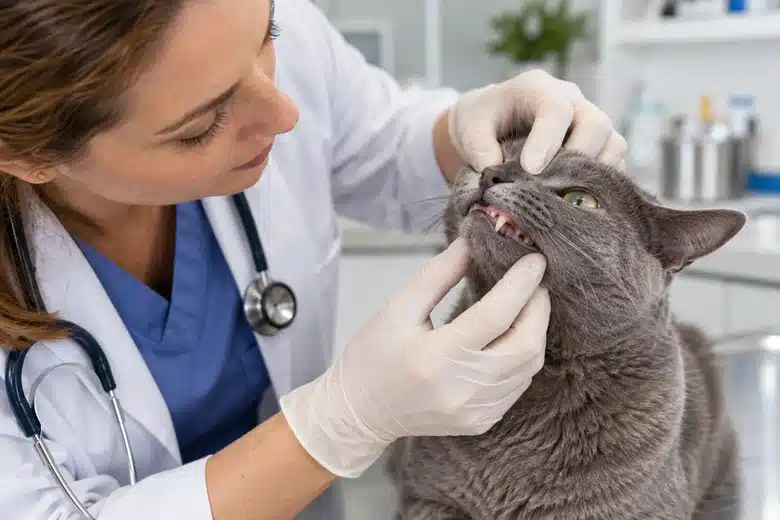
Imagine a cat whose veterinarian has recommended an oral examination and cleaning, with treatment to be decided after assessment. This is an illustrative scenario with no invented treatment price. The question is not simply whether the policy includes dental. It is which diagnosis supports each invoice line, when that condition first appeared, and whether preventive and treatment costs share an anesthetic episode. The veterinarian decides appropriate care; the insurer applies the contract.
For a concrete audit, this page uses the Illinois Pets Best IAIC-PB10001-ILL specimen and its Illinois amendment, and Trupanion’s Illinois V10.201902 specimen, both served on October 7, 2026. The former’s §6 distinguishes periodontal treatment, trauma and other tooth conditions; the latter’s §7 adds specific examination and recommended-care obligations. These state-scoped examples must not be copied into a claim under a different state form or enrollment version.
Map the cat’s service to a benefit route
| Service or reason | Contract route | What the inspected evidence says | Still needed |
|---|---|---|---|
| Traumatic fractured tooth | Accident/illness dental treatment | Pets Best §6.A.2 addresses trauma, tooth-specific treatment and prior repetitive chewing | Cause, tooth, history, timing and itemized treatment |
| Periodontal extraction | Dental illness | Pets Best §6.A.1/B.1 restricts eligibility where earlier dental signs exist | Previous examinations and first symptoms |
| Preventive scaling and polishing | Cleaning/wellness | Both inspected accident/illness forms exclude prophylaxis | Selected wellness endorsement if seeking a cleaning allowance |
| Routine examination | Preventive or exam-fee route | Pets Best §8.F distinguishes wellness and eligible-condition exam allocation | Purpose of visit and selected supplemental benefit |
| Radiographs and anesthesia | Diagnostic/treatment or cleaning-associated charge | AVMA explains their clinical roles; policy classification follows purpose | Written allocation for mixed covered and excluded work |
Periodontal extraction
Preventive scaling and polishing
Routine examination
Radiographs and anesthesia
The two dental checklists are not interchangeable
Trupanion Illinois §7.A requires dental examination at least every 12 months and following recommended dental care within the stated timeframe. If there was no exam in the 12 months before enrollment, the specimen makes the later first examination important to the start of dental coverage and excludes findings or prior signs at that point. Its §7.C also contains dental-history exclusions and procedure restrictions. Do not turn an annual checkup into a promise that every later extraction qualifies.
The inspected Pets Best Illinois §6 does not contain the same annual-exam wording. Its periodontal and trauma provisions must be read as written, including tooth-specific endodontic restrictions and exclusions for prior signs. A general website summary describing a different cleaning-maintenance rule must not overwrite this form. If an insurer sends a different version with your quote, redo the audit against that version rather than choosing the more favorable wording from two documents.
Ready to check current rates?
Keep policy terms, deductible, reimbursement and limits beside the quote so the comparison stays consistent.
What the Illinois cleaning allowance can and cannot establish
The live Illinois routine-care selector displayed a $0 Spay/Neuter/Teeth Cleaning allowance for EssentialWellness and up to $150 for BestWellness, with the category presented as one combined annual row. This is a published state-selected schedule, not an issued wellness endorsement or an individual cat quote. Treat $150 as a possible category ceiling, not the price of dentistry and not an additional allowance for each service in that row.
The value calculation starts with the eligible amount actually used from that row, plus eligible benefits used from other rows, minus the real annual add-on charge. If the cat has no eligible service in a category, the unused allowance contributes nothing to that year’s reimbursement. A large total schedule maximum cannot automatically be counted as savings. No cat-specific wellness quote or issued endorsement was obtained here, so the net-value result remains unknown.
Ask for an allocation before assuming the anesthetic is covered
Pets Best §6.B.3 excludes cleaning and its associated fees, explicitly including anesthesia, blood work and fluids. Section 8.C addresses mixed eligible/ineligible invoice costs. Trupanion’s prophylaxis definition also includes associated fees. That does not by itself establish the treatment-related portion of a mixed visit. Ask the practice for separate procedure lines and the insurer how it would allocate shared costs; keep its written response with the estimate. A clinical need for anesthesia and contractual eligibility are separate findings.
A dental packet for this cat
Common questions
If cleaning is excluded, is an extraction excluded too?
Not automatically. The diagnosis, history, tooth and applicable dental-treatment clause need separate review; associated costs may still require allocation.
Does a $150 allowance make the add-on worthwhile?
Not by itself. Compare benefits you can actually use with the full annual add-on cost and the issued schedule.
Ready to compare with clearer inputs?
Keep the policy terms beside the price, then continue to rates when the comparison is clear.